Business Transformation: The 3 Ps
A successful business transformation starts with solving the relevant and right business problem.
But that’s only the tip of the iceberg.
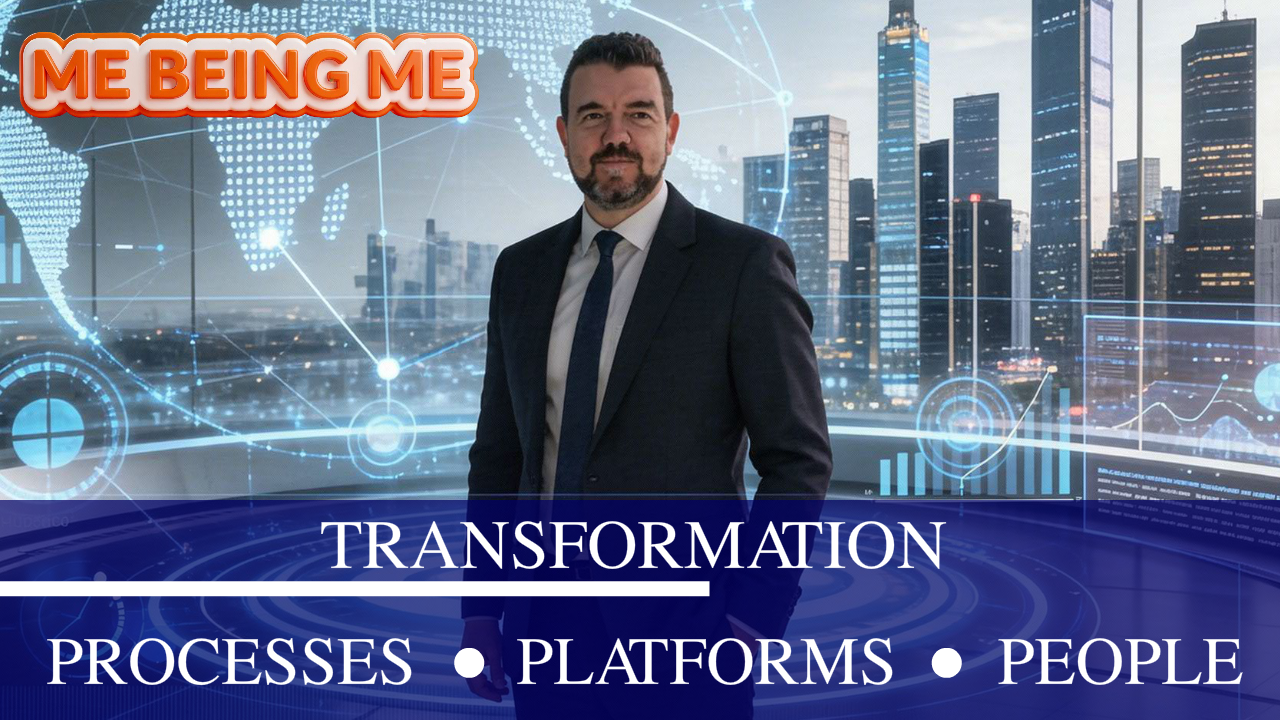
Real transformation happens when you align:
✅ Processes that need optimization
✅ Platforms that enable scale
✅ People capabilities that drive adoption
Technology alone doesn’t transform businesses.
People, processes, and platforms working together do.
Starting a transformation journey?
Keep reading and make sure you’re building more than a solution — build the foundation for lasting change.
#BusinessTransformation #DigitalTransformation #ChangeManagement #Leadership #OperationalExcellence #TransformationJourney
BUSINESS TRANSFORMATION: The 3 P´s
Doing what we do today is easy. Doing something different tomorrow is the real challenge.
Business transformation is a fundamental organizational change designed to improve competitiveness, performance and/or long-term sustainability. It is based on strategy and impacts not only technology, operations, culture, and customer experience but also future strategy.
Transformation is built on three pillars or Ps: Processes, Platforms, and People.
Processes define the path.
Platforms enable the path.
People make the transformation happen.
Every transformation must begin with a shared vision across stakeholders, a clear understanding of why change is necessary and what success looks like. Most transformations do not fail because of technology; they fail because people are not aligned, engaged, or trained for change.
Processes.
A process is simply a sequence of activities designed to achieve an outcome. Every company depends on processes to operate efficiently, deliver value, and serve customers.
Take a simple example: eating pasta for dinner. The objective is to eat dinner, and pasta is one of the inputs. There are different ways to achieve the same result depending on priorities such as cost, quality, or speed. Cooking at home may be cheaper but slower, while ordering online may be faster but more expensive.
Organizations operate through hundreds of processes, although only a smaller group is truly business-critical. Reviewing, simplifying, and optimizing these processes is a key part of any successful transformation initiative.
Platforms
Platforms — including applications, tools, and digital solutions — are critical enablers of transformation. They create operational efficiency, improve collaboration, unlock new opportunities and increase business agility.
However, there is no universal solution that fits every organization. A strong platform strategy should therefore focus on two key principles:
Ensure that systems and tools are configured to maximize execution speed, scalability, and transparency during the transformation journey.
Align technology decisions closely with business operations to ensure long-term efficiency, sustainability, and measurable business value.
Technology alone does not transform a company. Technology enables people and processes to evolve.
People
People are the true drivers of transformation.
Once the direction is clear and the right platforms are in place, transformation succeeds when people understand the purpose behind the change, see the benefits, and feel equipped to contribute.
Consider the evolution of transportation from horse-drawn carriages in the 1800s to automobiles in the 1900s. The technology changed, but the real transformation happened because people adapted. They learned new skills, embraced new ways of working, and recognized the value of the new model.
The same principle applies in organizations today. Transformation happens when people:
Understand the vision,
Develop new capabilities,
Embrace change and
Contribute to a better customer and business outcome.
Transformation is not only about implementing new technology. It is about enabling organizations, and the people within them, to work differently, think differently, and create greater value.
Thinking about transformation? Let’s talk.
